PHILADELPHIA, July 23, 2026 The way people communicate at work has quietly and fundamentally...
Employee engagement is a critical factor in organizational success, but leaders across industries grapple with a common challenge: how to foster a workplace culture that not only attracts top talent but also retains and inspires it. Unfortunately, many leaders don’t know how to improve employee engagement or even where to start, especially when the traditional tried-and-true methods like one-size-fits-all incentive programs, “fun” social events, and overreliance on company perks no longer work. An employee survey at a company indicates overlooked areas like growth opportunities, work processes, and communication.
Unlocking Employee Growth and Development (G&D)
According to Velocity Advisory Group’s 2025 Trends Report, comprised of survey data from more than 13,000 individuals across nine diverse organizations, employees, especially high performers, crave opportunities for meaningful growth. While not everyone aspires to leadership or management roles, people still want to be challenged and to develop new skills. Unfortunately, many organizations fall short in providing these opportunities, which can lead to disengagement and even attrition.
Investing in professional development doesn’t just benefit employees — it bolsters organizational innovation and resilience. As Amanda Nichols, Data and Analytics Advisor at Velocity Advisory Group, puts it: “Employees aren’t expressing dissatisfaction about not becoming managers, they just want meaningful opportunities to learn and grow.”
Examples of G&D that don’t require leadership development include advanced certification in their area of expertise, cross-departmental learning, peer mentoring, ownership of high-impact projects, opportunities to share their thought leadership (blogs, white papers, keynote speaking, podcast appearances, etc.), or company-sponsored participation in industry events.
The Hidden Cost of Inefficient Processes
Frustration with outdated technologies and inefficient processes also emerged as a significant engagement barrier. One organization’s struggle with an outdated phone system, as revealed in the report, exemplifies how simple inefficiencies can cascade into larger frustrations. Addressing these pain points quickly can yield immediate improvements in morale and productivity.
Communication: A Two-Way Street
Velocity’s findings also show the importance of communication. Employees want transparency, timely feedback, and approachable senior leaders; however, trust in senior leadership is notably lacking in many organizations. Aligning leadership actions with core values and fostering open dialogue are critical steps toward bridging this gap.
The Growing Gap Between Senior Leadership and Managers
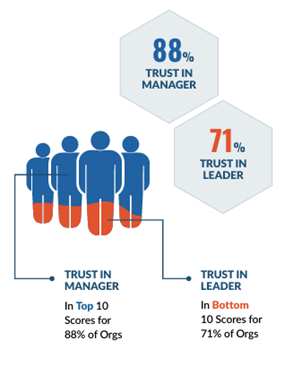
One striking insight from the report is the growing disparity in trust and communication between senior leadership and frontline managers. While trust in managers ranks among the top strengths for 88% of organizations, confidence in senior leadership ranks in the bottom 10 for 71% of companies.
It’s essential for leaders to communicate transparently and effectively. Velocity Advisory Group offers a unique approach to understanding communication style utilizing our innovative take on the traditional DISC assessment. Our four Bird styles – Eagle, Parrot, Dove, and Owl – each reflect distinct approaches to communication. Knowing your style offers a powerful tool for strengthening workplace relationships. This approach equips leaders to communicate effectively across diverse styles, reducing friction and enhancing team dynamics.
“Communicate intentionally and set clear expectations. Leaders who demonstrate balance and openness foster trust and improve team performance.”
If you feel like you are already doing that, but your employee engagement survey shows this gap, take a look at middle managers. They’re likely in one of two positions:
- They’re stuck in the middle between senior leadership and employees and either aren’t receiving information or don’t feel empowered to share information so they end up saying things like “I wish I could tell you more.” This leads employees to trust that their manager is doing their best to be transparent, but that the manager is being handcuffed by leadership.
- The other options is that the mid-level managers don’t trust Senior Leadership and “platooning” is happening, which can look like “Leadership hasn’t told me anything, either, so I don’t know what’s going on myself.” In this case, the employee and the manager are on the “same side,” sowing distrust for the leadership team.
If you’re noticing this gap and suspect that a breakdown is happening at the middle manager level, ask a few follow-up questions to these people leaders, suggests Brooke Page Thompson, President of Velocity Advisory Group:
- Do you trust leadership?
- Do you respect how leadership makes decisions?
- Do you think the leadership team holds themselves accountable?
- Do you think the leadership team operates ethically?
Want More Employee Engagement Insights?
The 2025 Velocity Advisory Group EX Trends Report dives deeper into these findings and offers actionable strategies for leaders to elevate employee engagement. It also explores broader workforce trends, such as the growing demand for flexible work arrangements and the evolving role of leadership in addressing employee well-being.